


Hey Royals,
At some point in your life, you’ll sit in a room full of people
and still feel alone.
You’ll laugh.
You’ll contribute.
You’ll show up.
But something inside you will quietly whisper,
“Nah, I don’t belong here anymore.”
That moment often marks the beginning of a quiet awakening:
The need to build better circles.
Not because your friends suddenly became bad.
But because you became more aware.
More sensitive to energy.
More honest about alignment.
More intentional about peace.
And once that awareness begins, you can’t unsee it.
Why You Need a Better Circle
I once spoke with someone who said,
“I don’t know why I feel stuck.”
“I’m doing everything right.”
But when we looked closer, effort wasn’t the issue.
The environment was.
Their circle normalised mediocrity, dismissed growth, mocked emotional depth, and rewarded stagnation.
No matter how hard they tried, they were pouring growth into a space that couldn’t hold it.
That’s why learning how to build better circles matters.
Because your environment either nurtures you or quietly drains you.
1. Choose Alignment Over Attachment

There’s a quiet grief that comes with outgrowing people.
Not dramatic.
Not explosive.
Just subtle.
You notice conversations feel shallow. You edit yourself more. You leave interactions feeling misunderstood.
You still care about them. But you have to admit that history alone is no longer enough.
That’s when you ask;
- “Do we still share values?”
- “Do I feel safe here?”
- “Can I grow freely in this space?”
Attachment holds you.
Alignment frees you.
2. Pay Attention to How You Feel After Interactions
Have you ever finished a conversation and needed to recover emotionally?
Not because the person was overtly unkind,
But because the energy felt heavy.
Draining.
Off.
That’s not imagination. That’s information.
Your body notices what your mind tries to rationalise:
- exhaustion after certain calls
- tension before certain meetups
- relief when you leave
Peace is data, and your nervous system is honest.
3. Build Around Shared Values, Not Proximity
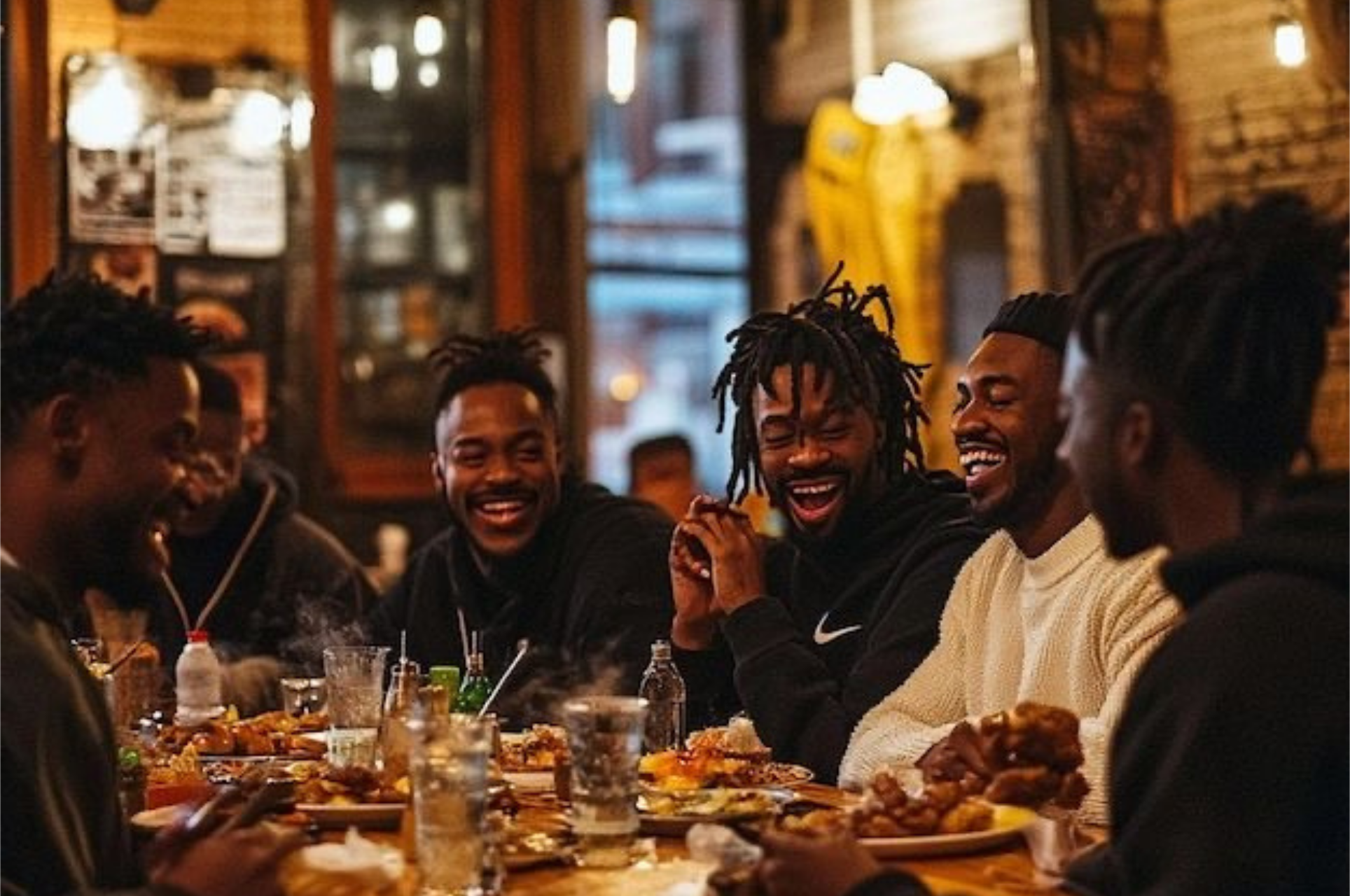
Proximity creates access but not compatibility.
Two people can sit in the same office every day and still live in entirely different emotional worlds.
One values growth, the other fears change.
Yet proximity forces a connection that values never supported.
Building better circles means you no longer choose people simply because;
They’re around
They’re familiar
They’re convenient
Rather, you choose people because;
You share integrity
You share emotional maturity
You share respect
You share direction
Compatibility is deeper than location.
4. Become the Energy You Want to Attract
As you heal, you change.
You speak differently. Listen differently. Respond differently. Set boundaries without apology.
And suddenly, certain dynamics no longer work.
That’s because building better circles is not just about choosing others. It’s also about becoming a healthy associate.
You would notice that you no longer enjoy gossip, entertain emotional chaos, or shrink for the sake of belonging.
Growth changes your circle naturally.
5. Let Go of Spaces You’ve Outgrown
Sometimes the hardest part isn’t leaving people. It’s accepting that you no longer fit.
You walk into familiar spaces and feel like a visitor.
Conversations that once excited you now feel repetitive.
Dynamics that once felt normal now feel draining.
That discomfort is not betrayal. It’s evolution.
You build better circles when you dare to honour your growth, even when it means letting go quietly.
No announcements. No drama. Just distance.
6. Prioritise Emotional Safety Over Familiarity

Familiarity feels safe, but it can also keep you stuck.
Sometimes the healthiest circles feel unfamiliar at first
They look like;
People who respect boundaries
People who communicate honestly
People who don’t thrive on drama
People who support growth
Learning how to build better circles means choosing safety over comfort, even when safety feels new.
7. Be Honest About Your Relationship Needs
There’s nothing wrong with wanting a deeper connection.
You’re allowed to desire emotional availability, mutual effort, respect, consistency, and honesty
You don’t have to tolerate shallow connections.
You don’t need to apologise for desiring depth.
8. Invest in Depth, Not Numbers
At some point, you’d realise:
One safe friend is better than ten draining connections.
One honest conversation is better than endless surface talk.
One aligned circle is better than forced belonging.
Quality sustains. Numbers distract.
9. Be Bold Enough to Initiate Aligned Connections
Aligned people don’t always find each other by accident.
Sometimes, someone has to make the first move.
When you meet someone who feels safe, grounded, and aligned, don’t overthink it.
Follow up.
Express interest.
Invite the connection.
Building better circles isn’t only about letting go.
It’s also about being brave enough to build.
10. Protect Your Circle Like Your Peace Depends on It

Because it does.
Your circle shapes, your self-talk, standards, habits, confidence, and emotional stability.
When you change your circle, you change your life. (How your circle affects your life).
Upgrading to better circles is not about arrogance.
It’s about stewardship of your emotional space.
Not everyone deserves access.
Conclusion
Learning how to build better circles is not about cutting everyone off.
It’s about waking up.
It’s about noticing energy.
Honouring growth.
Choosing alignment.
Protecting peace.
You won’t lose everyone.
You’ll lose the misaligned ones.
And what remains will feel lighter, safer and aligned.




Follow up on aligned connection, intentional actions builds the circle we want
Awesome piece. The point I really resonate with is,” One safe friend is better than ten draining connections”.
“Chose alignment over attachment’
This is being very realistic
Cheers Queen Sam