


Dear Royal,
Finally, I get to answer one of the most-asked questions in my DMs and emails:
“How do I become more confident in myself?”
As I began drafting this piece, I found myself thinking about an African proverb that says, “Until the lion learns to believe in its own strength, it will always live in fear of the hunter.”
And that proverb stopped me for a moment. Because it does not say the lion is weak. It does not say the hunter is more powerful. It simply says that the lion’s greatest problem is not the hunter outside, it is the doubt within. That is the reality for so many people. The threat is not always external. The cage is often built from the inside.
You feel confident until someone disapproves of you.
You feel beautiful until no one compliments you.
You feel talented until your work gets ignored.
You feel smart until someone more accomplished walks into the room.
You feel secure until a relationship changes, a boss criticises you, or social media becomes silent.
This is the problem with approval-based confidence: it disappears the moment the approval does.
And many of us were raised on it without realising it.

External Validation is a Shaky Foundation.
There is nothing wrong with encouragement. We all need support, love, and affirmation. The problem, however, begins when approval becomes oxygen.
Because people are inconsistent.
The same people praising you today may misunderstand you tomorrow. Audience change. Relationships change. Trends change. Human emotions change.
If your confidence is built entirely on how people respond to you, your emotional stability will constantly be at the mercy of other people’s moods, opinions, and preferences.
And that is exhausting.
I remember speaking to a woman who had spent years being “the smart one” in every room. Her identity was built around being admired for intelligence and achievement. Then she entered a more competitive environment where she was no longer the standout person. And suddenly, she began doubting herself completely.
Nothing about her intelligence disappeared.
What disappeared was the external reinforcement she had relied on to feel secure.
The danger of borrowed confidence is that it cannot survive silence.
Confidence is Not the Same Thing as Performance.
One of the biggest misconceptions people have is that confident people always perform perfectly.
They do not.
Real confidence is not “I will never fail.”
Real confidence is “I can survive failure and still remain valuable.”
There are people who look incredibly confident because they perform well publicly, but internally, they are terrified of disappointing people. Their self-worth is based on outcomes.
Then, there are others who may not always perform flawlessly, but they trust themselves deeply. They know one mistake does not erase their identity.
That is the difference.
Performance says: “I am worthy when I succeed.”
Confidence says: “I am worthy whether I succeed today or not.”
One depends on perfection.
The other depends on identity.
And identity-based confidence is far more stable.

Start Building Evidence of Your Own Capability.
One reason people struggle with confidence is that they keep waiting to feel confident before they act.
But confidence is rarely born from feelings first. It is usually built through evidence.
Tiny, but repeated evidence.
You keep promises to yourself. You do hard things. You survive difficult seasons. You try again after the embarrassment. You learn new skills. You become reliable to yourself.
That is how confidence grows.
Not through motivational quotes alone. Not through pretending to be fearless. But through lived proof.
Think about a child learning to walk. They do not become confident before attempting to stand. They become confident the more they try to stand, through falling, adjusting, and rising again. Each attempt is not a performance. It is evidence.
Life works in the same way.
One of the most powerful things you can do is start collecting personal evidence.
Write down moments where you handled something difficult. Moments where you adapted. Moments where you solved problems. Moments where you showed courage, discipline, wisdom, or resilience.
Although the brain remembers failures loudly and lingers on them. You must intentionally remind it of your capability, too.
The Way You Speak to Yourself Matters More Than You Think.
“I am not enough.”
“I always fail.”
“I don’t deserve this.”
“Who do I think I am?”
“I am an embarrassment”.
You cannot build sustainable confidence while constantly speaking to yourself with cruelty.
Self-talk becomes the emotional climate your mind lives in daily.
And no, positive affirmations alone will not magically solve deep insecurities. But your inner voice does matter.
There is a difference between honesty and self-destruction.
Honesty says: “I made a mistake.”
Self-destruction says: “I am the mistake.”
One creates growth.
The other creates shame.
Pay attention to the language you use when you fail, when you are rejected, or when you compare yourself to others.
Because eventually, the voice you hear most becomes the voice you believe.
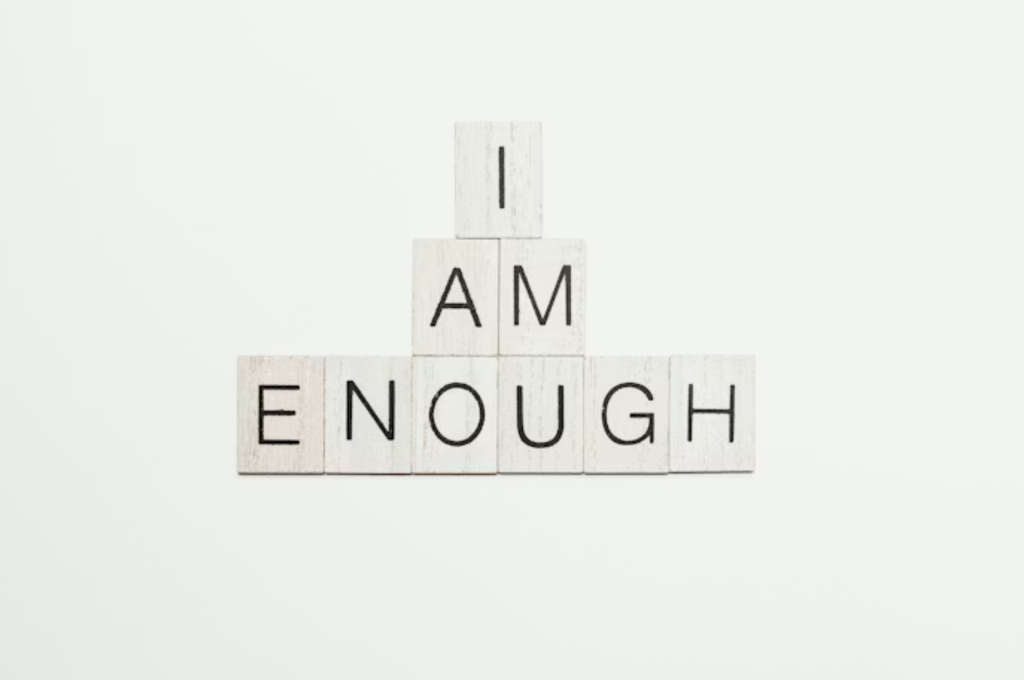
What to Do When Your Confidence Dips.
Even deeply confident people have moments where they question themselves. Confidence is not a permanent emotional state you achieve and never lose. It is something you return to, sometimes daily.
There will be days you feel behind.
Days you feel unattractive.
Days you feel ignored.
Days when rejection bruises your ego.
Days when fear becomes loud again.
So, when that day comes when your confidence dips:
1. Return to facts, not feelings
Feelings are real, but they are not always accurate narrators. A feeling of failure is not proof of failure.
Ask yourself: What have I survived before? What evidence exists that I am capable? What would I say to someone I love in this situation?
Let the facts answer, not the fear.
2. Stop over-consuming comparison
Comparison distorts reality. You are comparing your full human experience to someone else’s highlight reel, public image, or best season.
That comparison will always make you feel insufficient.
3. Reduce the need to be universally liked
Not everyone will understand you, choose you, or approve of you. And that is not proof that you are failing.
Sometimes growth requires disappointing the version of you that lived entirely for acceptance.
4. Keep showing up anyway
Some of the strongest confidence is built in ordinary moments of consistency.
You go to the gym even when insecure. You post the content even when nervous. You attend the interview even when afraid. You apply for opportunities even after rejection.
That repetition quietly rebuilds self-trust.

Daily Practices That Rebuild Confidence from the Inside.
Self-confidence is not built in one dramatic moment. It is built through daily decisions.
Here are a few practices that genuinely help:
i. Keep small promises to yourself.
Confidence grows when your mind learns:
“I can trust myself.”
ii. Limit dependence on external praise.
Celebrate compliments, but do not emotionally collapse without them.
iii. Journal your growth.
Write down victories, lessons, answered prayers, progress, and moments of courage.
Your brain needs reminders.
iv. Spend time with people who do not require you to perform constantly.
The right relationships create safety, not exhaustion.
v. Develop skills quietly
There is confidence that comes from knowing:
“I have actually worked on myself.”
vi. Strengthen your spiritual and internal life.
People who are deeply grounded internally/spiritually are usually less influenced by public opinions.
Because they have roots deeper than applause.
Final Thoughts.
Always remember, people’s opinions will always change.
Some people will admire you.
Some people will misunderstand you.
Some people will leave.
Some people will never see your value clearly.
But your life becomes emotionally dangerous when your worth rises and falls with human approval.
Confidence that lasts is built differently.
It is built through self-trust.
Through resilience.
Through healing.
Through keeping promises to yourself.
Through knowing who you are beyond performance, beauty, success, relationships, or applause.
And slowly, you begin to realise something freeing:
You do not need everyone to believe in you before you believe in yourself.
Dear Royal, pin this post. Come back to it on the days it is hard to believe in yourself. And on those days, remember, the lion was never weak. It simply forgot its own strength.
🎁 Get Your Free Becoming Journal
Enter your email to receive your free guide straight to your inbox ✨
Built with intention ✨




Kudos! Interesting piece!!
Thank you so much
Stay tuned for more
Nice work!
Thank you so much