



Dear Royal,
Trust me, I get it.
The average 9-5 worker is already managing traffic, exhaustion, unfinished tasks, poor sleep, and the emotional weight of adult life, and that’s before factoring in a partner, children, and even ageing parents.
So when they see content promoting a “successful” morning routine that starts at 4 a.m. with journaling, green juice, a 10km run, meditation, and reading, for someone who leaves for work by 8 am, they feel overwhelmed, quit, and conclude:
“Maybe I’m just not disciplined.”
But the problem is almost never discipline.
The problem is trying to build a routine designed to impress rather than one that lasts.
Stop Building Routines for Your Fantasy Self.
Here’s a question worth reflecting on: Who are you actually building this routine for?
Most people, if they’re honest, are building it for an imaginary version of themselves. One who sleeps perfectly, has unlimited energy, faces minimal stress, and genuinely enjoys waking before sunrise. That person isn’t you.
Your routine needs to fit the life you’re actually living, not the life you imagine you’ll have once you “get it together.”
If you currently wake up at 6:30 a.m. feeling exhausted, jumping to 4 a.m. isn’t ambition — it’s self-sabotage camouflaged as productivity. The gap between where you are and where you want to be cannot be closed by punishing yourself in the morning.
Consistency matters more than intensity. A simple routine you maintain for six months will do more for your life than an extreme one you abandon after a week or two.
Audit Your Mornings Before You Redesign Them.
Before adding anything new, look honestly at what’s already happening.
For one week, pay attention to your mornings without trying to change them.
Ask yourself:
- What time am I actually waking up, not what time I intend to?
- What’s the first thing that creates stress or friction?
- Is there a moment in the morning when I feel calm or in control, even briefly?
- What do I wish I had more time for?
This matters because most people skip straight to building the “ideal” morning without understanding what’s actually wrong with the one they already have. You can’t fix what you haven’t looked at.

Build Around Non-Negotiables, Not a Checklist.
Once you understand your mornings, the next step is choosing two or three habits, not more, that genuinely support how you function.
These are your non-negotiables: the small anchors that help you feel mentally, emotionally, and physically ready before the day’s demands begin.
To find yours, ask: What would make me feel like the morning was mine, even slightly, before work takes over?
For some people, the answer is five minutes of stillness before anyone else wakes up. Some, it’s drinking water and reviewing their priorities for the day. While others, it’s simply leaving the house without rushing.
None of these is glamorous. That’s exactly the point.
The goal isn’t a Pinterest-perfect morning. The goal is a morning that consistently sets you up rather than sets you back.
If you’re looking for concrete ideas to draw from, I’ve previously written about https://queensam.com/20-morning-routines-that-improve-productivity-all-year/. Pick the two or three that feel realistic for your actual life.
Focus on Energy, Not Performance.
A morning routine isn’t a productivity ritual you perform to prove something. It’s a support system for the version of you that has to show up at work, manage relationships, and get through the day.
Ask yourself honestly: Does this habit give me energy, or does it cost me energy?
Some habits that look good on paper, like waking at 4 a.m. when you’re sleep-deprived, doing an intense workout when your body needs rest, are quietly draining you. A routine that leaves you more depleted than when you started is not discipline; it is self-abuse.
Protect your sleep. Reduce unnecessary pressure. A shorter, calmer morning beats an impressive one that you dread.

Your Routine Should Support Your Life, Not Control It.
One difficult morning doesn’t mean you’ve failed. One difficult week doesn’t mean the routine is broken.
Life is uneven. Some mornings will be chaotic. In some seasons, illness, a new baby, or a heavy work period will make your normal routine impossible. That’s not failure. That’s just life happening around you.
The people who sustain healthy routines long-term aren’t usually the most extreme or the most disciplined. They’re the ones who learned how to keep showing up imperfectly. They scaled back when needed. They started again without drama when they fell off.
Flexibility is also discipline.
A Simple Framework to Start.
If you’re not sure where to begin, try this:
1. Observe your current mornings for a week without judgment
2. Identify the single biggest source of stress or friction
3. Choose two or three habits that address how you actually feel in the morning
4. Protect those habits for 30 days before adding anything else
5. Adjust based on what’s working, not based on what looks impressive
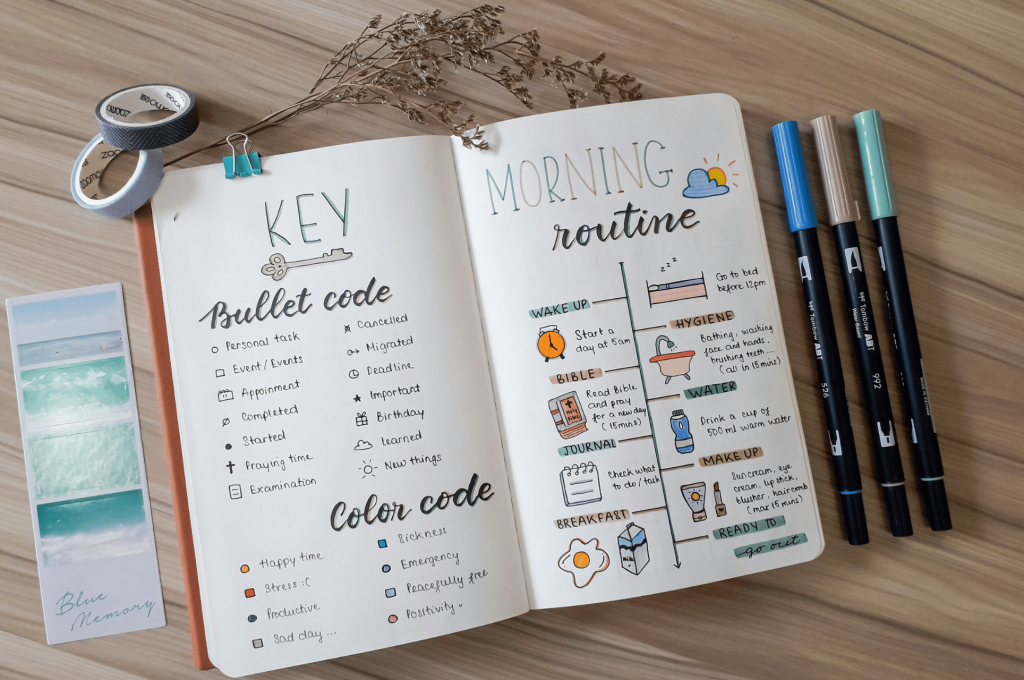
That’s it. No app required. No 17-step ritual.
Final Thought
Royal, a morning routine should not feel like punishment for having goals.
It should feel like the quiet part of the day that belongs to you before the demands begin, before the noise starts, before the world needs something from you.
A peaceful morning may not solve your entire life, but it changes the way you enter the day. And sometimes, that changes more than you realise. Start with what’s real. Build from there.
🎁 Get Your Free Becoming Journal
Enter your email to receive your free guide straight to your inbox ✨
Built with intention ✨